
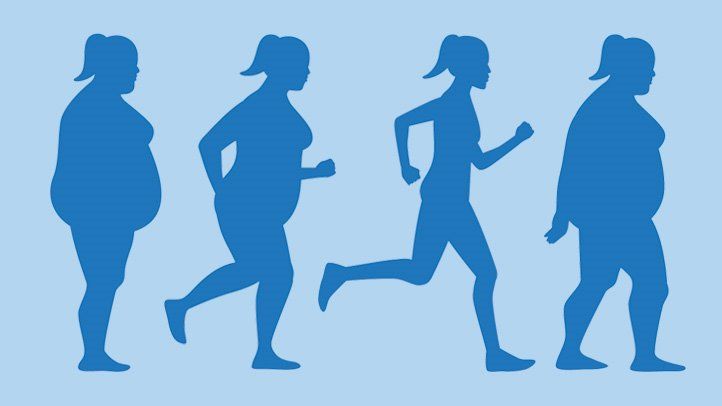
“I’ve tried everything but all the weight keeps coming back,” says my first client on this cold Thursday morning. “In fact,” she continues, “If this doesn’t work, I will simply give up”. She may be my first client today but this certainly is not the first time I’ve heard the same story. Anybody can lose weight but maintaining this new weight is what makes the difference.
My aforementioned client is a classic yo-yo dieter and it was apparent from the first time we talked. This article will help you find out what yo-yo dieting is and if you are one, like my client, what to do about it.
What is yo-yo dieting?
Weight cycling is the clinical term for yo-yo dieting. It’s a cycle that starts with a valiant effort at weight loss, getting your results, gaining the weight back, and ends in yet another attempt at weight loss.
Here’s the classic yo-yo dieting situation: You are overweight and people look at you funny when you eat a decadent burger and some coke in public so you go on a diet to lose weight. After months of hard work sweating at the gym and eating kale salad, you hit your goal. Since you’re now slim and trim you resume your normal diet. Boy have you missed those burgers so you set up a date with one (or two…)and go to town. One day you pull out your go-to little black dress and it doesn’t fit. You remember that actually, half your clothes don’t fit. It dawns on you that you have regained all the weight back! The horror. You go back on a diet and the process begins again.
This cycle of dieting, losing weight, gaining it back, and dieting again is the hallmark of yo-yo dieting.


Signs of Yo-yo Dieting
Simply put, if the situation above is the story of your life then you’re probably yo-yo dieting. The predominant sign is that you keep having to go back to dieting after a period of weight loss because you have regained all the weight.
Binge eating after a period of dieting is a danger sign that you’re entering into stage two of yo-yo dieting.
How common is it?
Yo-yo dieting is quite common. USA-based research showed that 80% of people who lose weight regain it within a year. Basically, most people who go on a diet are unable to keep the weight off.
Effects of Yo-yo dieting?
While gaining and regaining weight like …well, a yo-yo, may seem like a harmless disappointment, it actually has some serious negative consequences. The two most harmful are:
Loss of muscle mass
Rapid weight loss is more harmful than helpful in the long run. You may fit perfectly into your wedding dress but post-honeymoon, that perfect fit will be just a sweet memory. Rapid weight loss is frowned upon in medical circles because most of the weight loss usually targets muscle and water weight loss instead of fat.
Losing muscle instead of fat leaves your body in a worse state than not losing any weight at all. It’s surprising, I know. To put it into perspective, the older you get the more your body weight shifts from predominantly muscle to half or most of your weight being fat. This shift comes with a host of complications that go along with aging like a higher risk of diabetes and high blood pressure. With this not-so-pretty picture in mind, the same happens to you when you lose mostly muscle after a weight loss stint.
Decrease in metabolism
Although losing a lot of weight fast makes for a pretty impressive before and after Instagram picture, it has a detrimental impact on your metabolism.
To understand why, you need to know what happens as you lose weight. All diets that put you at a negative energy balance (you eat less than what your body needs for energy) will help you lose weight. However, you will eventually hit a plateau where you cannot lose any more weight on the same diet. This happens because your body has effective homeostatic control of energy balance. Therefore, you will adjust to the reduced food portions usually by a reduction in metabolism. This reduced metabolism may be maintained even after you’re off the diet. This has a negative effect because a lower metabolism means you will gain weight after you resume eating normally.
How to overcome yo-yo dieting

1. Seek help
Having an expert assist you on your journey will help you avoid common weight loss pitfalls like yo-yo dieting.
2. Focus on sustainability
Look at it this way, if you change your diet drastically, for a month or two, you will certainly not be able to maintain it. For example, if you join a juice fast that only allows liquid vegetables in your diet, you certainly won’t be on it for the rest of your life. Any time you’re off the fast, your weight will snap back like it never left. However, if you start small, like taking a vegetable every dinner, this is something you can maintain for the rest of your life on this plane. In short, doing it the first way makes yo-yo dieting inevitable while doing it the second way makes it very unlikely.
3. Change your relationship with food
You’d be surprised at how often you eat for almost any other reason except hunger. Think about it: why did you have lunch yesterday? Were you really hungry or was it because it was your lunch break time? Why does an ice cream scoop look tempting on a warm sunny day and an absolute horror on a freezing cold morning? The point is, we don’t usually eat for the right reason, that is to end hunger and fuel our bodies. We do it for other reasons, usually emotional ones. Once you stop looking at food as a crutch on a hard day and see it as an opportunity to nourish yourself, things will be different. I’m not saying you shouldn’t enjoy your meal, just that negative food associations are a good place to start for sustainable weight loss.